Beyond the Hype: Evaluating AI Platforms for Genuine Skill Development
Trend Hunter, meanwhile, flags the broader AI learning-platform category—but that is a category label, not proof that every chatbot with a quiz button has discovered neuroplasticity.
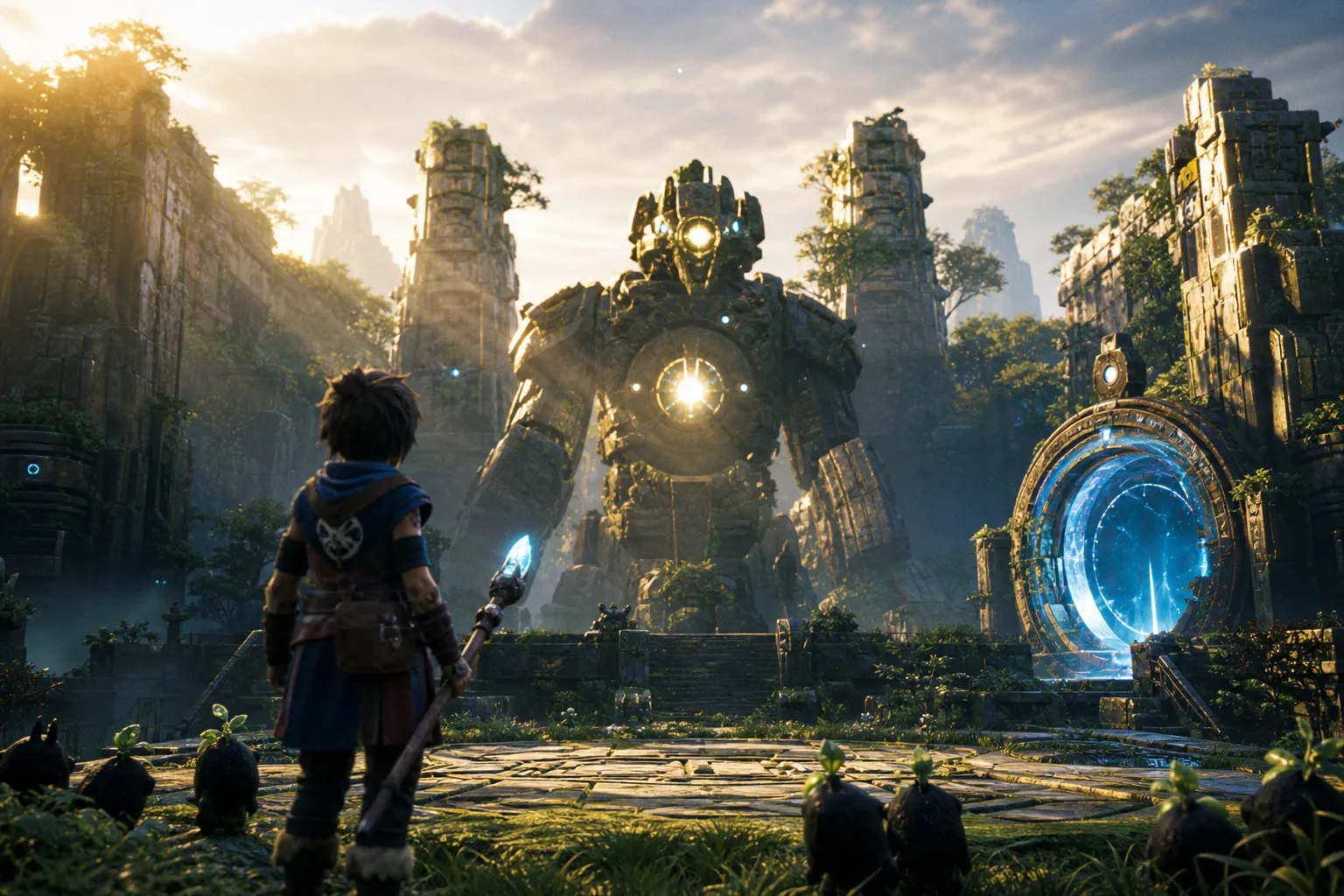
According to Training Journal, immersive learning platforms can help close a “readiness gap” by letting people practise realistic scenarios alongside their day-to-day work. Trend Hunter, meanwhile, flags the broader AI learning-platform category—but that is a category label, not proof that every chatbot with a quiz button has discovered neuroplasticity.
I’m the crash-test dummy for this stuff, and the first lesson is brutally simple: “AI” is not a learning design. It is a capability. The useful question is whether a platform creates practice, feedback and repeatable decisions—or merely serves dopamine hits in a friendly interface.
Immersion is only useful when the task survives contact with reality
Training Journal’s case for immersive platforms is practical: teams can run crisis simulations in their working environments and bring learners in different locations together in collaborative virtual spaces. The appeal is obvious. People can train while continuing to deliver critical services, rather than disappearing into a classroom for a compliance ritual.
That is the part educational-game designers should steal—not the shiny virtual lobby. A simulation earns its pixels when the learner must spot a problem, choose an action, see consequences and try again. Passive “exploration” is not a simulation. It is a screensaver with a budget.
For parents, teachers and self-directed learners, translate the workplace pitch into one test: after a session, can the player do something they could not reliably do before? Explain a concept. Solve a fresh puzzle. Make a safer decision under changing conditions. If the answer is “they completed a module,” the app has dodged the hard bit.
AI can personalise the path; it cannot supply the proof
AI platforms promise tailored learning because, naturally, the old dream is a tutor for everyone. Fine. But personalisation without a clear skill target is just a feed wearing spectacles.
Before paying—or handing over a classroom—check what the platform actually adapts. Does it change the difficulty of problems? Does it explain why an answer failed? Does it revisit weak material through spaced repetition? Or does it simply produce more text, more badges and more ways to keep clicking?
The Training Journal piece frames the pressure clearly: organisations need to upskill and reskill while budgets are finite. That constraint applies outside corporate training too. Time is the non-refundable currency. An app that makes learners feel busy while avoiding retrieval, correction and transfer is expensive, even when it is free.
For a useful wider view of turning AI learning into a deliberate career experiment rather than a vague aspiration, read how treating a career like a science lab helped overcome the fear of learning AI.
What I would test before trusting the pitch
I would give any AI learning platform a small, merciless trial. Set one concrete outcome. Use it for a short stretch. Then test the skill away from the app, without its hints, mascots or leading prompts.
Watch for the classic failure modes: answers that sound authoritative but cannot be checked; “adaptive” tasks that keep repeating the same trick; and immersive scenes where the only real decision is which button advances the story. Those are not minor UX blemishes. They are the product.
Download an AI learning platform if it gives you meaningful practice, specific feedback and evidence that skills transfer beyond its own walls. Skip it if the main achievement is making learning look futuristic.