Polaris and Minnesota 4-H turn ATV safety lessons into a digital game
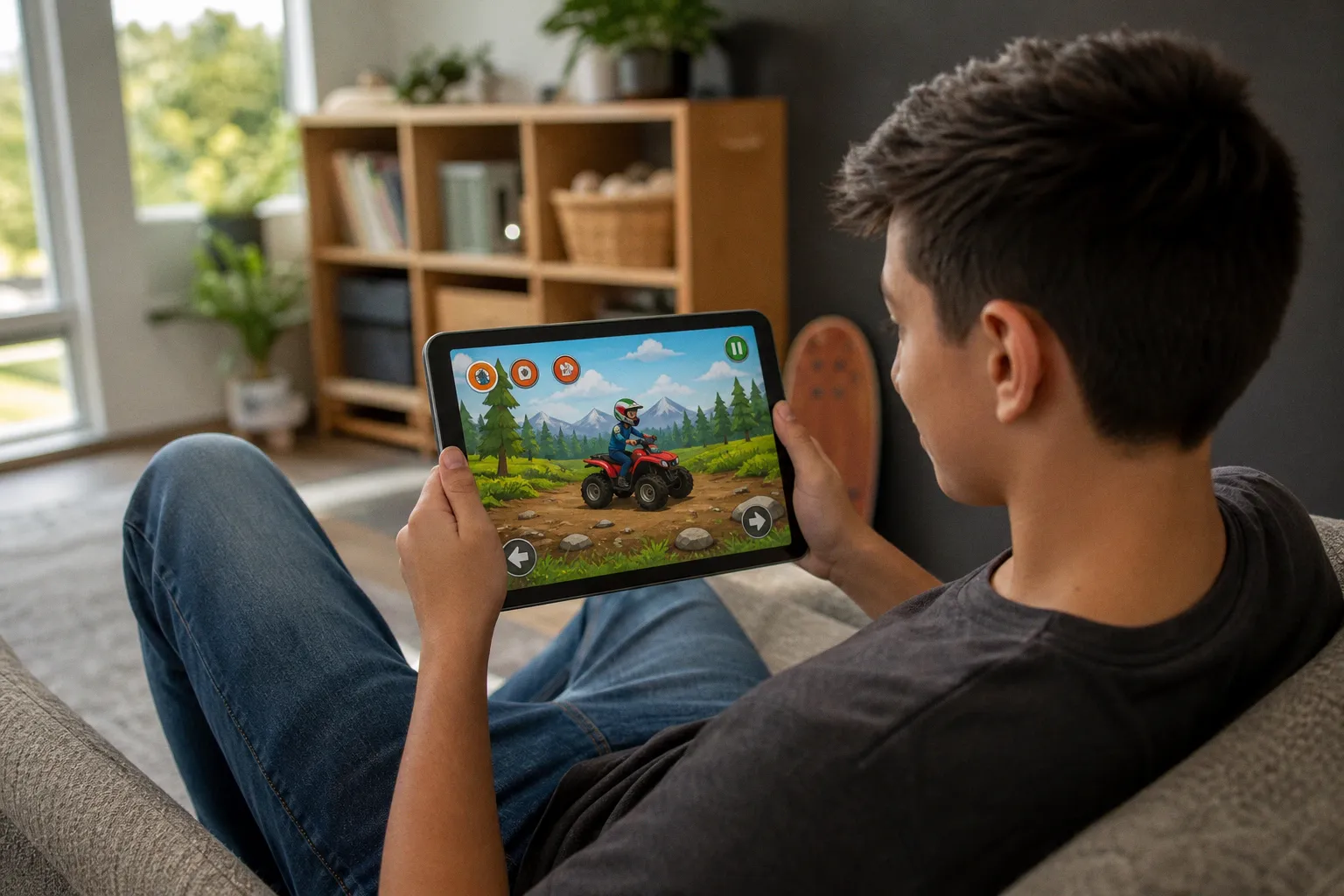
Polaris and Minnesota 4-H just dropped ATV Adventure Academy: Trailblazers, an interactive digital experience on the CLOVER platform aimed at kids 10–13.
ATV Safety Gets the Game Treatment — But Does It Actually Teach?
The Game Mechanic (What Little We Know)
Trailblazers presents ATV safety as a series of decision scenarios — trail-themed, interactive, progressive. Participants make choices mimicking real riding situations. That's the entire structural claim. No details on scoring, feedback loops, spaced repetition scaffolding, or adaptive difficulty. For a cognitive game critic, that's a yellow flag. Scenario-based learning can leverage desirable difficulty and retrieval practice beautifully — but only if the game actually punishes wrong choices meaningfully and revisits concepts. Otherwise you're just clicking through a branching PDF. Rebecca Anderson, Minnesota 4-H ATV Safety Ambassador, helped review pacing and interaction style. Her quote — "when kids enjoy it, they actually remember it" — is textbook intrinsic motivation theory. Whether the game delivers on that is another question entirely.
Where the Cognitive Science Gets Interesting
Here's the part worth watching. Polaris positions this explicitly as a pre-training tool — not a replacement for formal rider education, but a primer. That framing is smart. Pre-exposure to safety concepts before hands-on instruction leverages what cognitive scientists call a schema activation effect: arrive at in-person training with mental models already scaffolded, and you absorb faster. Korinne Caldwell, Polaris's ROHVA Certified Instructor, calls it "meeting youth riders at the beginning of their safety journey." Translation: reduce the novelty load during real training so kids can focus on execution, not definitions. If Trailblazers genuinely front-loads foundational concepts through interactive decision-making, it's doing something a safety pamphlet never could — building procedural knowledge through attempted action, not passive reading. That's the generation effect in play.
The Blunt Takeaway
Polaris and 4-H aren't selling brain training. They're selling behavior change through engagement, which is a more honest pitch than most learning apps make. The expansion to Wisconsin and Utah suggests they think it works. But here's what I want to know and currently can't verify: completion rates, knowledge retention at follow-up, and whether kids who finish Trailblazers actually perform better in hands-on training. Without that data, it's a promising delivery mechanism with unproven outcomes. For parents of 10–13-year-olds eyeing ATVs this summer? It's free, it's on CLOVER, and getting kids to think about throttle control before they're gripping one — that's not nothing. Just don't mistake the game for the real lesson.