KIDZ AI Pairs a Physical Robot With Its Learning Software After Winning the 2026 EdTechX Award
At the close of trading on the announcement day, shares of KIDZ AI Inc (NASDAQ: KIDZ) posted intraday gains reported between 80% and 110%, the kind of move that typically flags a small-cap name reacting to catalyst news rather than a sustained repricing.
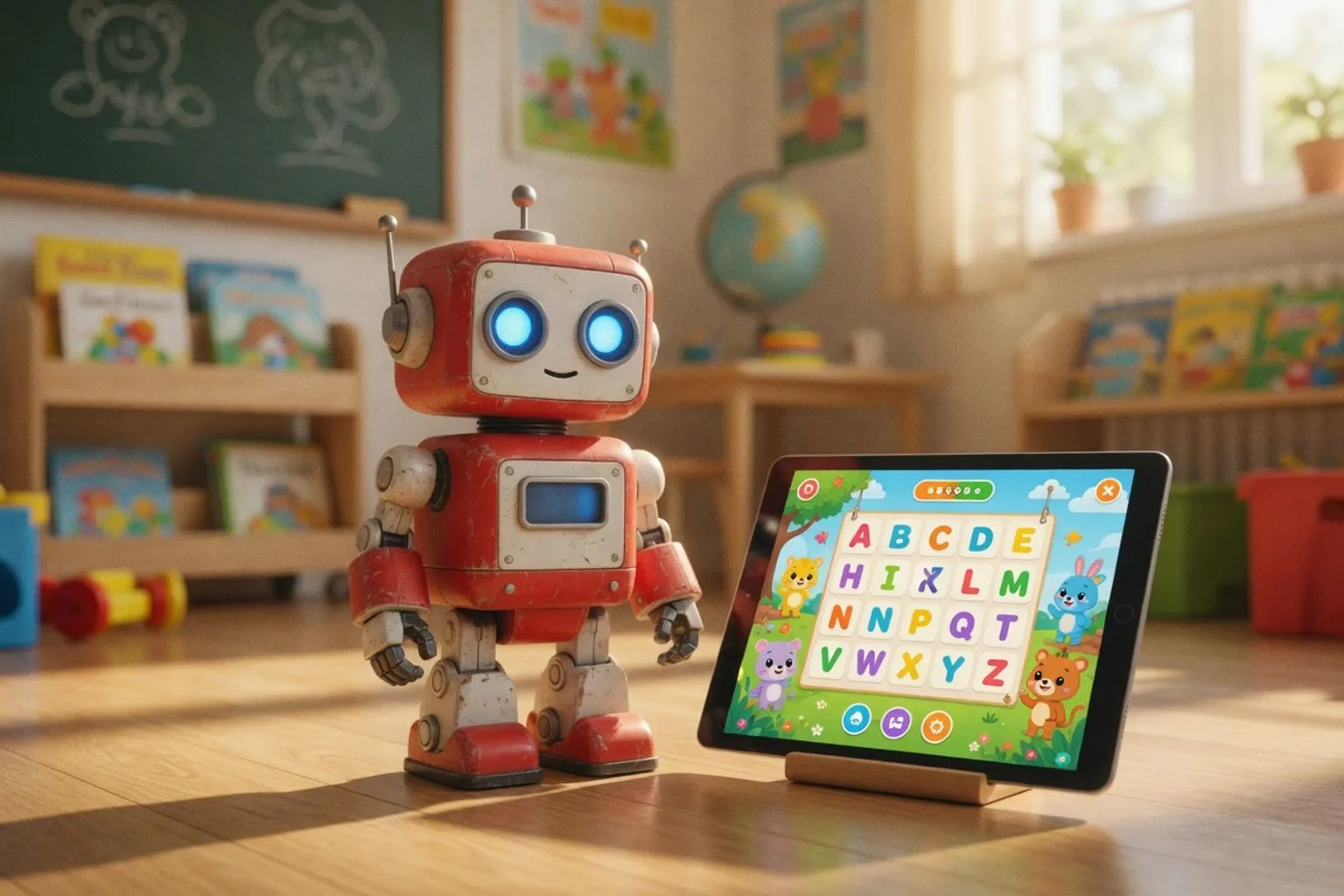
What KIDZBot actually pairs
KIDZBot is described as a hardware-software hybrid: physical robots, coding tools, curriculum content, and an AI layer handling memory, reasoning, and sensor feedback. The pedagogical claim is operationally heavy rather than rhetorical. Children are meant to engage with material by manipulating a physical object that perceives and responds, rather than by tapping through another glass surface. The distinction matters because screen-bound tutoring apps, adaptive quiz platforms, and chatbot-style homework helpers still dominate the AI-driven K-12 segment, and most of them never escape the display.
Judges for the EdTechX Award specifically cited the company's progress in intelligent tutoring, adaptive instruction, and robotics-based learning. EdTechX is a UK-based industry body that spotlights edtech breakthroughs, and the Americas category positions KIDZ AI against a competitive field that includes Duolingo (NASDAQ: DUOL), Stride (NYSE: LRN), TAL Education Group (NYSE: TAL), and New Oriental (NYSE: EDU), though none of those competitors has yet shipped a robotics pairing at scale for this audience.
Mechanics versus marketing
Embedding robotics into a learning product widens the engineering surface area well beyond shipping another app. Hardware design, manufacturing tolerances, durability under child handling, and sensor calibration all become core deliverables alongside the instructional design work. Most AI education firms have avoided that complexity, partly because software-only products iterate faster and carry lower marginal cost. KIDZ AI's willingness to absorb the extra layer is a structural bet on a particular interaction model: that retention rate improves when the learner co-manipulates a responsive object instead of scrolling.
Broader market context supports the timing. Grand View Research projects a 10.8% compound annual growth rate for education technology through 2033, with the K-12 segment leading that expansion on demand for game-based, adaptive, and personalised tools. KIDZBot sits inside that growth corridor by design, aiming to reduce the cognitive load problem inherent to passive screen consumption by routing engagement through tactile feedback loops.
What to verify before adoption
Commercial rollout is planned for the second half of 2026, beginning with learning centres and expanding into schools and after-school programmes. For educators, parents, and program directors weighing the platform against existing edutainment options, three variables will determine whether the announced mechanics translate into measurable learning outcomes or merely into a more elaborate wrapper around the same content:
- Retention mechanics. Does the sensor feedback produce a sustained gamification loop that pulls the child back to the robot, or does novelty decay by week two?
- Curriculum alignment. Which standards does the bundled curriculum map to, and how does the AI tutor route and scaffold misunderstandings?
- Total cost of ownership. Hardware replacement cycles, firmware update cadence, and per-seat pricing will set the real comparison against screen-only alternatives already on the shelf.
Until those specifications land on a product page rather than a press release, KIDZBot is best treated as a high-pedigree announcement rather than a deployable system, and the 80-to-110 per cent price swing as a sentiment event rather than a fundamentals verdict.