Samsung targets global edtech as AI powers teacher tools at ISTE in US - CHOSUNBIZ
Samsung is being positioned, according to Chosunbiz, as targeting the global edtech market as AI-powered teacher tools take the stage at ISTE in the US.
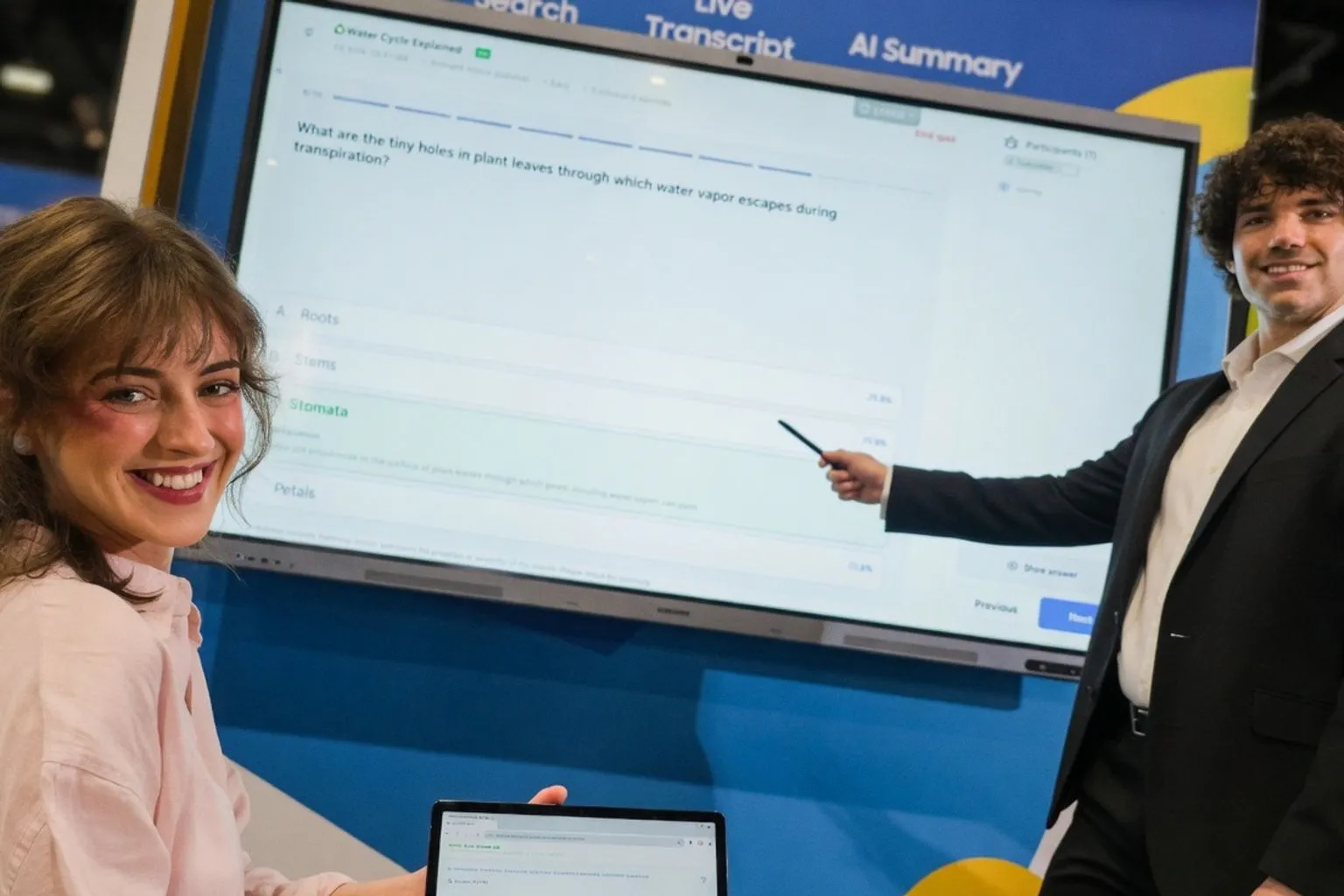
The real claim is teacher augmentation, not classroom automation
The reported Samsung angle fits a broader edtech pattern: AI is moving from student-facing novelty into teacher-facing infrastructure. In practical terms, that means tools for planning, feedback, classroom management, content adaptation, and possibly assessment support. The pedagogical value depends on where the system sits in the learning loop.
If AI handles low-value administrative friction, it can create more room for scaffolding, correction, and targeted practice. If it replaces teacher judgment or compresses lesson design into generic outputs, the system risks lowering instructional precision. For educational gaming and learning-app environments, the same distinction matters: a strong AI feature should adjust challenge, feedback, and sequencing around learner performance, not merely generate content faster.
The UN panel’s preliminary report is directly relevant here. It says AI can improve access to education and support well-defined professional tasks, but it also warns that gains are not automatic. Outcomes depend on tool design, teacher readiness, and whether AI supports rather than replaces the mental effort students need for learning. That is the core evaluation frame schools should apply to any AI classroom platform, including one coming from a large consumer technology vendor.
Capability is rising faster than school safeguards
The panel describes AI capabilities as advancing faster than governments, researchers, and regulators can reliably measure or govern them. Its report, prepared ahead of international AI governance talks in Geneva, covers education, science, employment, security, human rights, and child safety. For schools, the important part is narrower but significant: implementation quality now matters more than access.
The report points to rapid performance gains across advanced AI benchmarks. Top performance on Humanity’s Last Exam rose from 8% to 45% in 16 months. GPQA Diamond scores for the strongest systems rose from 36% in 2023 to about 95%. FrontierMath performance increased from 19% in January 2025 to 88% in 2026, and several AI systems reached gold-medal-level results on the 2025 International Mathematical Olympiad.
Those numbers do not mean AI systems are consistently reliable in classrooms. The panel also notes that established tests become less useful as models approach near-perfect scores, that benchmark material may have appeared in training data, and that advanced models may behave differently during evaluation. For edtech buyers, this creates a measurement problem: vendor demos may show fluent performance while failing to demonstrate retention rate, transfer, age-appropriate scaffolding, or error handling under real classroom conditions.
What schools should verify before adopting AI teacher tools
The immediate checklist is methodological, not promotional. Schools should ask whether the tool makes the teacher’s decision process more visible or more opaque. A useful AI assistant should show why it recommends a task, how it adapts difficulty, and where a teacher can override the sequence. Without that transparency, the system adds automation but not instructional control.
Teacher readiness is another constraint. The UN panel is explicit that education outcomes depend on whether teachers are prepared to use AI. A platform may reduce workload for trained staff while increasing cognitive load for teachers who must inspect, correct, and reformat machine-generated materials. That hidden workload is often where edtech return on investment erodes.
Child safety also belongs in the procurement discussion, not as an afterthought. The panel includes child safety among its areas of concern, and any AI tool used around students should be assessed for data handling, inappropriate outputs, overreliance, and the risk of displacing productive struggle. In learning games, that last issue is especially important: effective gamification loops reward effort, feedback use, and mastery progression, not passive completion.
A separate Education News item frames teacher social media addiction as a threat to competency-based education. The available snippet offers no further detail, but it points to the same operational reality: teacher attention is now part of the learning environment’s infrastructure. Adding AI systems without clear boundaries can either protect that attention or fragment it further.
The verdict is cautious. Samsung’s reported push into global edtech is worth watching because large platform vendors can change classroom tooling quickly. But the adoption case should rest on evidence of better instructional scaffolding, lower teacher workload, safer student interaction, and measurable learning gains—not on AI presence alone.