K-12 Teachers Explore Experiential Learning Through CMU Summer Camp
Carnegie Mellon University convened 31 K-12 teachers at its inaugural Teacher Summer Camp, structured as a five-day, hands-on immersion in game design, experiential learning, and maker-driven instruction.
The mechanics of the week
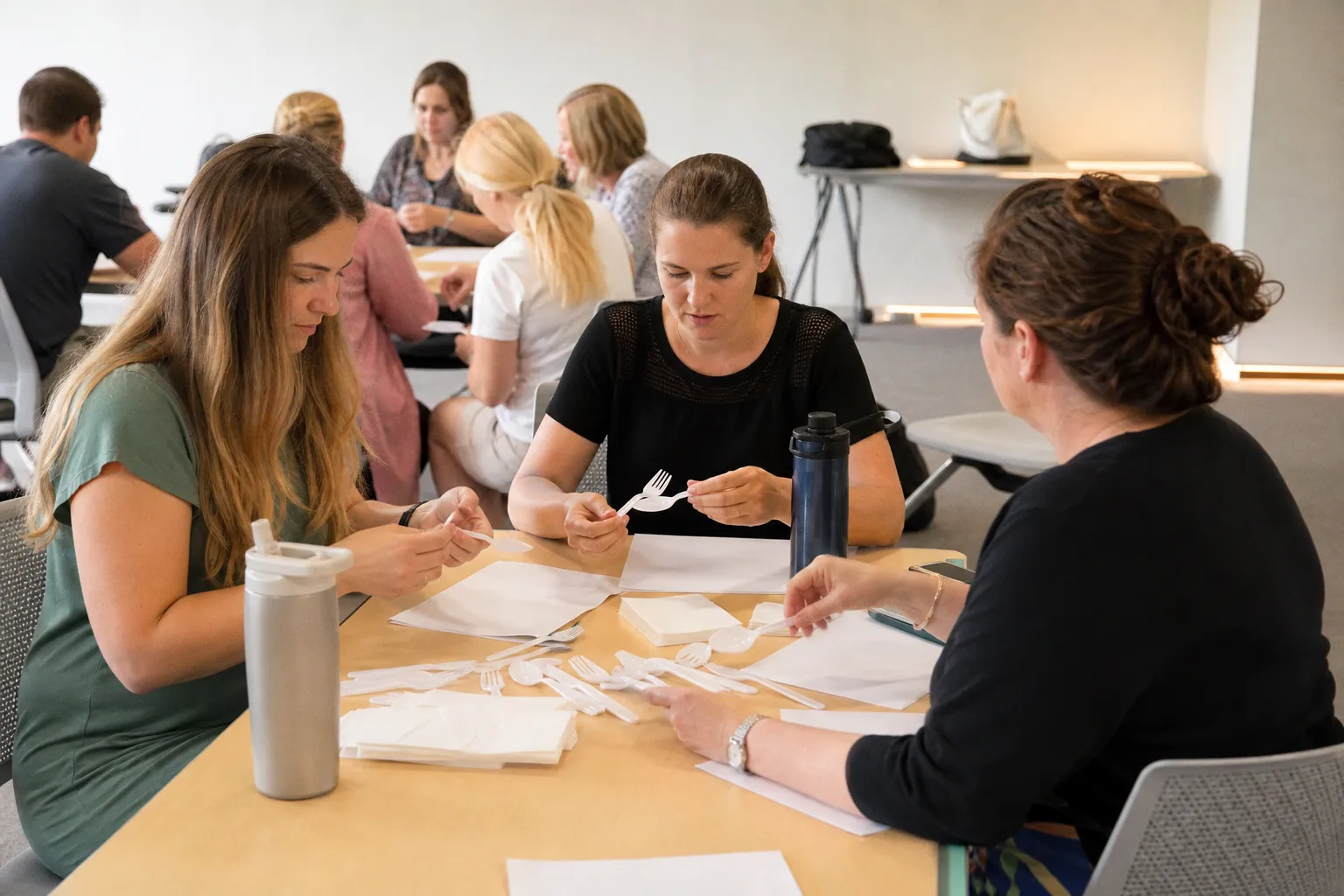
The cohort — 31 participants drawn primarily from western Pennsylvania plus two teachers from Massachusetts — moved through sessions in art, STEM, robotics, laboratory work, and library special collections, with game design and experiential learning threaded across the schedule. Pittsburgh-based nonprofit Matt's Maker Space sponsored the camp and hosted programming on two of the five days, inserting a maker-education loop into the formal curriculum. The sequence follows a recognizable cognitive load reduction pattern: teachers operate the tools themselves before being asked to translate those experiences back into classroom-scale projects, which lowers the abstraction barrier that normally blocks adoption of project-based methods.
Several sessions were held in CMU's recently renovated Posner Center for Special Collections, a deliberate pairing of physical artifacts with active making. The week is calibrated so that retention of the demonstrated pedagogical patterns does not depend on subsequent in-person follow-up once the teachers return to their own schools.
Institutional leverage and curricular scope
CMU is running the camp through the Leonard Gelfand Center for Service Learning and Outreach, with the Simon Initiative's K-12 coordinator Lindsay Forman and Gelfand senior director Miriam Wertheimer handling organization. The framing in the source material — that "the most powerful tool we have at our disposal to make a real difference in regional education is through teacher professional development" — places PD as the primary dissemination channel for learning science research, rather than direct student outreach.
Reported topical coverage includes learning science, evidence-based instructional design, and artificial intelligence in the classroom, with parallel offerings through SUCCEED and physics and STEM educator summer workshops. Vice provost Kate Barraclough's address to the cohort reinforced the bidirectionality: the curiosity arriving at CMU originates in K-12 classrooms, making teacher capacity-building the upstream constraint on every downstream educational outcome the university can influence.
What this signals for game-based learning and edutainment
For learning-app developers, publishers of educational games, and makers of maker-space kits, the operational question is which design patterns survive the PD compression — meaning which tools 31 teachers can realistically operate, scaffold, and reproduce with their own students once the week's support structures disappear. The available observation from Sandeep Patil of Yudu Robotics and RedNerds — that "meaningful learning happens when you start small and build through hands-on experience" — converges on the same iterative instructional sequence CMU is structuring around game design and maker work, which is consistent with the scaffolding-first logic the rest of the camp reinforces.
The broader funding picture is relevant context. Recent coverage tracking where AI, consumer, and climate investment capital is concentrating across MENA startup activity gives a partial read on the regional software pipelines that may eventually supply K-12-facing AI tools (see the funding roundup). For practitioners sourcing classroom products today, the CMU camp provides a practical filter: favor designs whose scaffolding can be stripped down to what a single teacher can deliver without university-level infrastructure behind it.